

One product master for shop, warehouse, purchasing and every channel.
aYOUne PIMPIMPIM means Product Information Management: one central home for all product data — prices, photos, descriptions, variants. Maintain an item once; shop, warehouse and purchasing use the same details. is the central product database your shop, your marketplace feeds, your warehouse and your purchasing all read the same article data from, with over 200 fields per product, variants, attributes and your own custom fields. No data silo, no double entry.
A product quickly ends up with 200 properties: dimensions, variants, prices, descriptions in five languages, images, EANEANThe EAN is the 13-digit number below the barcode on almost every product. It identifies an item uniquely worldwide — handy for checkout, warehouse and marketplaces., serial numbers, batches. In most companies these sit scattered around, in the shop systemShop systemA software platform for running an online shop with product management, cart, payment and order processing., in a spreadsheet, in the warehouse software, in the feeds for Amazon and Google. Change one price and you have to update it everywhere. In aYOUne you maintain the article once, and shop, warehouse, purchasing, feeds and reporting all read the same data.
Product data
The core is the article itself: every detail structured in one place, quick to find and cleanly classified.
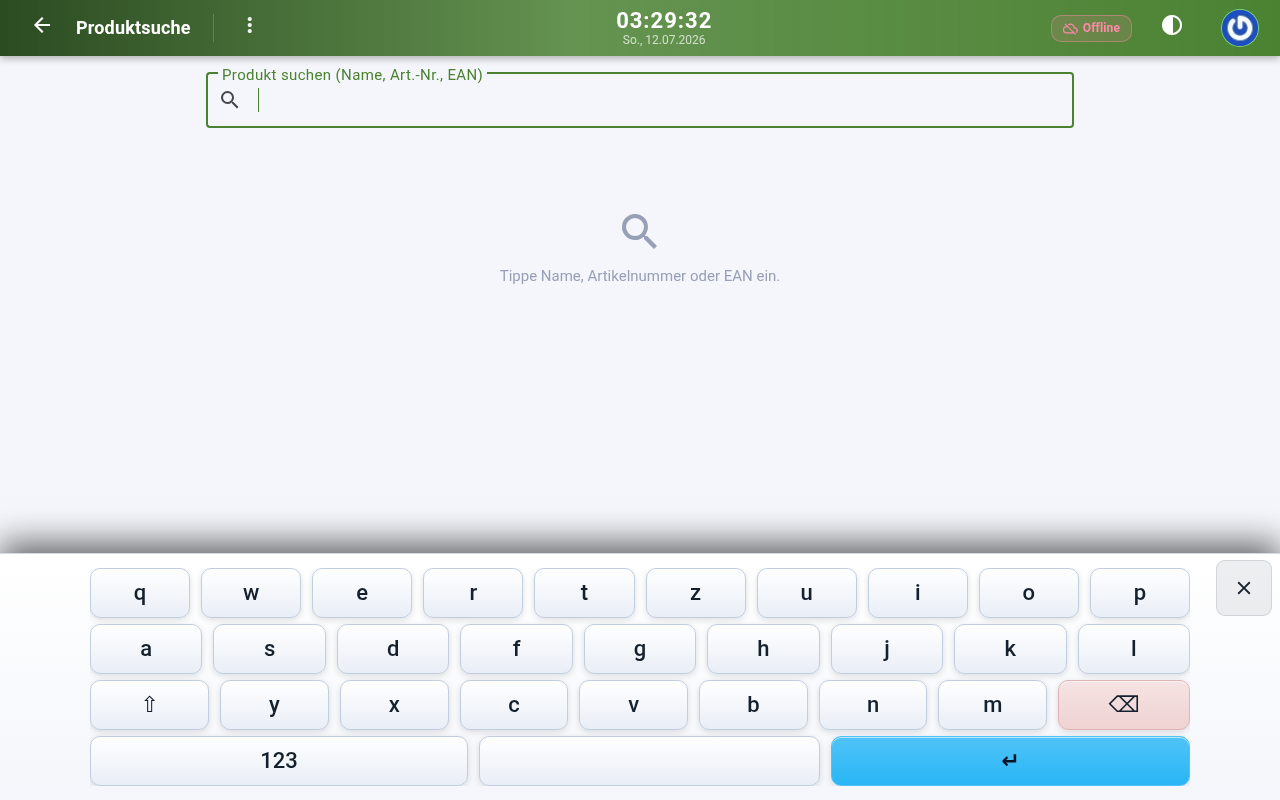
Product search
Find an article by name, article number or EAN. At the terminal you scan the barcode and the record is on screen right away.
Master-data editor
Every detail of an article in one editor with around 40 tabs: prices, dimensions, texts, media, suppliers. No jumping between forms.
Dynamic attributes
Create your own attributes per product group, filterable and multilingual. In the demo around 1,900 attributes hang on the articles.
ETIM classification
Classify articles by the ETIM standard, with around 26,000 features on file. Important for technical trade and for exchanging data with dealers.
Images & media
Product photos, data sheets and documents attach straight to the article and travel with it into shop and feeds.
Custom data fields
When the standard is not enough, you add your own fields and values, no developer needed. Your industry, your fields, right on the product.
Variants & costing
An article is rarely on its own. Variants, bills of material and costing turn the master record into a sellable range.
Variant system
Size, colour and finish hang off the same base article, each variant with its own price, its own EAN and its own stock, instead of maintaining a hundred separate articles.
Product groups & divisions
Sort your range into groups and divisions. Attributes, price rules and views pass down to every article below them.
EAN pool
Keep a supply of EAN numbers and assign them automatically when you create new articles or variants.
Full-cost calculation
Work from the purchase price through surcharges, labour and outsourced services all the way to the margin. The selling price sits in the calculation, not in a gut feeling.
Serials & batches
Track serial numbers and batches, for traceability, warranty and recalls without a second system.
Bill of material & bundles
Build articles out of components. Bills of material and bundles pull price and stock from their parts.
Feeds & channels
Maintained is only half the job. From the master, the data goes out channel by channel, into the shop, onto marketplaces and into price portals.
Product feeds
Generate channel-ready feeds for marketplaces and price portals. Each channel gets exactly the fields it asks for.
Export channels
Push the same master out to Amazon, Google and other channels. One price update takes effect everywhere, with no follow-up entry.
PIM selections
Build saved selections, for example every article of a brand with no image. That way you spot the gaps before the customer does.
Bulk edit
Change prices, attributes or texts for hundreds of articles in one step, instead of record by record.
Product lists
Put together article lists for catalogues, quotes or export and keep working with them.
Shop sync
The shop reads straight from the master. What you maintain is online without an extra step.
Who works with it
Product management & master-data upkeep
Create articles, maintain attributes and variants, manage texts and media, all in the product editor with clear tabs instead of scattered forms.
Purchasing & procurement
Supplier data, EANs and purchase prices hang on the same article. Procurement works without a separate article list.
E-commerce & marketplaces
Shop and feeds reach into the same master. What is maintained is ready to sell, variants and tiered prices included.
What the product master ties together
An article in aYOUne is the anchor point for the whole flow of goods:
- the stock in Inventory Management
- the quote and the order in Sales
- bills of material and manufacturing in Production
- campaigns and feeds in Marketing
- the analysis in Reporting
Because everything hangs on the same record, a price or text change is one click instead of a follow-up round through five systems.
Still maintaining your articles in Excel and three channel tools?
A 30-minute demo shows how one central product master supplies shop, warehouse, purchasing and feeds from the same data.
Book a demo See all modules